
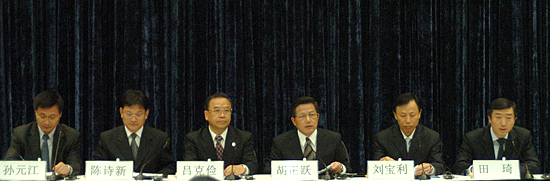
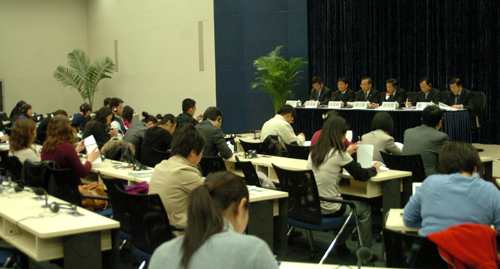
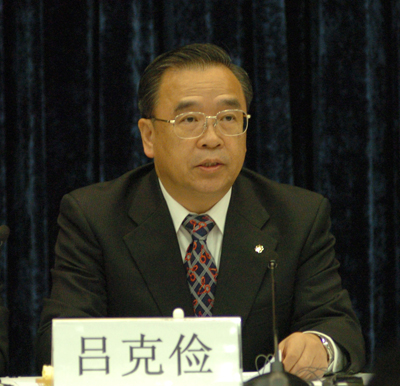
Premier Wen Jiabao will attend the 13th summit between China and the Association of Southeast Asian Nations (ASEAN) (10+1), the 13th summit between ASEAN and China, Japan and South Korea (10+3), the 5th East Asia Summit (EAS) and the meeting with leaders of Japan and South Korea in Hanoi, Vietnam from October 28 to 30, 2010. During a briefing held by the Ministry of Foreign Affairs (MFA) for Chinese and foreign media on October 21, 2010, Assistant Foreign Minister Hu Zhengyue, Director-General of the Department of Asian Affairs of the Ministry of Commerce (MOC) Lv Kejian, Deputy Director-General of the International Trade and Economic Affairs Department of the MOC Sun Yuanjiang, Deputy Director-General of the International Department of the Ministry of Finance Chen Shixin and Deputy Director-General of the Department of International Cooperation and Exchanges of the Ministry of Education Liu Baoli introduced respectively the background, major activities and significance of Premier Wen's attendance at those meetings and answered questions of journalists. Deputy Director-General of the Information Department of the MFA Tian Qi chaired the briefing at which there were nearly 100 Chinese and foreign journalists present.
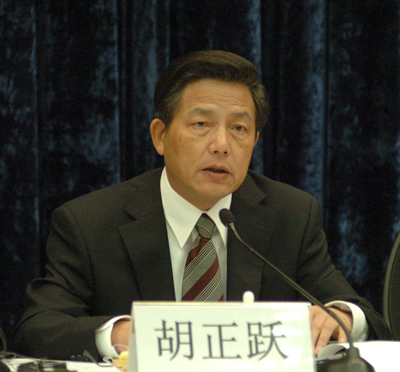
Hu Zhengyue noted that Premier Wen's attendance at the series of meetings of East Asian leaders is a major diplomatic activity of top Chinese national leaders with neighboring countries this year. As an important member of Asia, China always attaches great importance to and actively participates in East Asian cooperation. The Chinese side will attend the meetings in the spirit of strengthening good-neighborly friendship, deepening regional cooperation and promoting common development, review with other countries the past and look into the future of China-ASEAN cooperation, ASEAN's cooperation with China, Japan and South Korea, cooperation among China, Japan and South Korea and cooperation concerning the EAS and exchange views mainly on how to advance East Asian cooperation and integration process, increase competitiveness and jointly maintain regional peace and stability.
He said that the Chinese side has the following expectations on the meetings:
First, strengthen good-neighborly friendship. Mutual respect, mutual trust, equal treatment, dialogue and cooperation are the mainstream of relations among East Asian countries and constitute the basis for them to go through thick and thin together and move forward hand in hand. As the East Asian situation and countries are experiencing new changes, it is necessary for East Asian countries to better understand each other's development policy and direction through dialogue and communication so as to create a sound atmosphere and favorable conditions for the healthy and stable progress of bilateral relations as well as regional cooperation.
Second, deepen pragmatic cooperation. East Asian countries have seized the historical opportunities to develop their national economy and push forward regional cooperation 多年来and made East Asia one of the regions with the strongest growth dynamism in the world. In the post international financial crisis era, all the East Asian countries face the tasks of maintaining East Asian development impetus, accelerating East Asian integration and realizing sustainable growth. The Chinese side expects participants in the meetings to focus on the established theme, exchange opinions and put forward guidance on how to change the development mode, readjust the economic structure, boost the pragmatic cooperation among various mechanisms, enhance the internal driving force for East Asian development and improve the quality of East Asian development.
Third, complement each other with advantages. The ten ASEAN member states, 10+1, 10+3, China-Japan-South Korea and the EAS have evolved into major cooperation mechanisms in East Asia after years of development. How to move forward in the right direction and complement one another with advantages remains another practical issue faced by East Asian cooperation. The Chinese side admires ASEAN's adherence to the established direction, principles and tasks of East Asian cooperation, supports ASEAN in continuing to play a leading role in East Asian cooperation and hopes various East Asian cooperation mechanisms play their parts respectively, complement one another with advantages and seek common development in order to achieve the overriding goal of promoting regional peace and prosperity.
Fourth, reinforce communication and coordination. East Asian countries hold identical interest extensively on multiple global issues. It is the common aspiration of East Asian countries to have their voice heard on such major issues as the reform of international economic and financial system, opposition to trade protectionism, Doha Round negotiations, food security and energy security. The Chinese side hopes the meetings, as always, keep the overall situation in mind and pursue the spirit of seeking common ground while putting aside differences, share views on the international and regional issues of common concern and make important contributions to promoting the harmonious development, civilization and progress of Asia and the world at large.
Hu indicated that China actively advocates, takes part in and makes contribution to East Asian cooperation. China's development and progress of East Asian cooperation in recent years further demonstrate that China cannot develop without Asia or the world and vice versa. To stimulate the faster and better development of China and the entire Asia and promote regional peace and stability, Premier Wen, during the meetings, will fully recognize the achievements of China-ASEAN cooperation and East Asian cooperation, elaborate China's propositions and initiatives on reinforcing the 10+1, 10+3, China-Japan-South Korea and EAS cooperation and exchange views with other national leaders on the major international and regional issues of common concern. His participation in the meetings will help consolidate China's good-neighborly friendship with surrounding countries, broaden and deepen the mutually beneficial cooperation and push forward regional peace and development.
Lv Kejian noted that the bilateral trade and economic relations are entering into a new stage of all-round rapid development since the complete building of China-ASEAN Free Trade Area (FTA) this year and play an increasingly important role in the course of economic development of each side.
First, China and ASEAN have become major trade partners of each other. According to the statistics of the Chinese side, the bilateral trade volume has grown by 43.7% from January to September 2010 on a year-on-year basis to US$211.31 billion. ASEAN is China's fourth largest trade partner and export market and third biggest import origin at present. According to the statistics of ASEAN, the bilateral trade volume reached US$178.2 billion in 2009 and China has become ASEAN's biggest trade partner.
Second, China and ASEAN are increasing two-way investment. According to the statistics of the Chinese side, the cumulative amount of mutual investment between the two sides has reached US$71.1 billion as of August 2010. ASEAN member states are one of the major sources of foreign investment in China. So far, China's direct investment in ASEAN has exceeded US$10 billion and covered a wide range of areas, including agriculture, processing industry and service industry.
Third, China and ASEAN enjoy fruitful mutually beneficial economic cooperation. China has provided ASEAN member states with about US$10.1 billion of credit up to now and offered strong and effective support for their large infrastructure construction projects, industrial development, disaster relief efforts and personnel training.
Fourth, China-ASEAN FTA has been built completely and sub-regional cooperation moves forward steadily. China's average tariff on imports from ASEAN has dropped from 9.8% to 1.0% and the average tariff of 6 original ASEAN member states on imports from China has fallen from 12.8% to 1.6%. The Greater Mekong Subregion economic cooperation programs get more pragmatic and the Pan-Beibu Gulf (PBG) economic cooperation feasibility study has made progress.
Lv pointed out that the ever expanding and growing China-ASEAN trade and economic cooperation brings about tangible benefits to the businesses and people of both sides. The Chinese side attaches great importance to developing trade and economic relations with ASEAN member states and expects to strengthen bilateral trade, mutual investment, mutually beneficial economic cooperation and trade and economic cooperation with them under the regional frameworks. First, China and ASEAN will join hands to steadily push forward the development of China-ASEAN FTA, stimulate the sustained and stable development of bilateral trade and mutual investment, consolidate and improve the implementation of FTA agreement and achieve mutual benefit and win-win outcomes. Second, China and ASEAN will expand mutual trade and investment. China is willing to continue to increase imports from and investment in ASEAN. Third, China and ASEAN will boost regional and sub-regional cooperation. China hopes to strengthen trade and economic cooperation with the region under the frameworks of China-ASEAN, ASEAN-China, Japan and South Korea, the Greater Mekong Subregion Cooperation and the EAS.
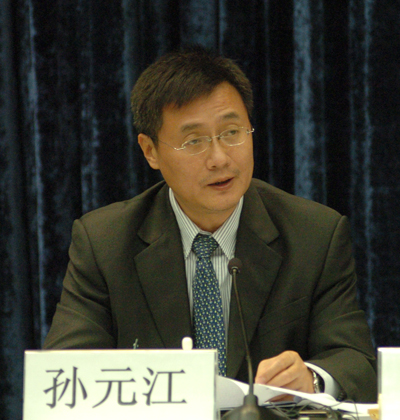
Sun Yuanjiang said that East Asian economic integration process has achieved tangible progress with the joint efforts of all parties concerned in recent years. As a mutually beneficial and win-win institutional arrangement, China-ASEAN FTA withstood the test of the latest financial crisis, effectively stabilized market demand and boosted confidence of countries in going through difficulties together. The two sides have finished the FTA peer review and will, according to the advices proposed by the peer review, improve the implementation of the FTA agreement, enhance trade facilitation, step up publicity, expand trade volume and lift up cooperation in order to benefit a larger number of enterprises. Meanwhile, the China-Japan-South Korea FTA government-industry-academia joint research has been launched successfully, which is of great significance to promoting the development of tripartite trade and economic relations and building the East Asian FTA. The three countries should speed up various efforts in an active, flexible and pragmatic attitude. The 10+3 East Asian FTA construction faces unprecedented opportunities. China is willing to discuss with all parties concerned how to accelerate the construction of East Asian FTA on the basis of fully respecting the core role of ASEAN and remains open to all the other East Asian cooperation mechanisms.
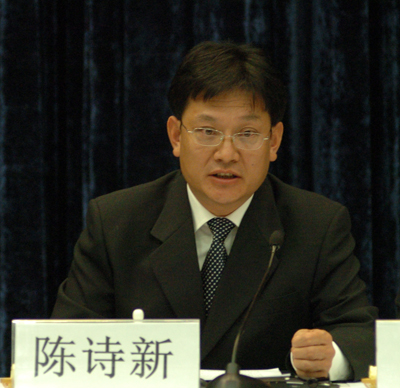
Chen Shixin introduced the development and specific achievements of East Asian financial cooperation in recent years. He noted that financial cooperation is one of the major areas of East Asian cooperation. Promoted actively by all relevant parties, East Asian financial cooperation complies with the trend of regional cooperation and has made fruitful achievements in terms of improving the regional financial aid mechanism and developing the regional financial market. First, Chiang Mai Initiative Multilateralisation (CMIM) made major progress. After years of efforts, the CMIM Agreement came into effect on March 24, 2010 and the regional foreign exchange reserve with a total size of US$120 billion was officially established, which has great importance to deepening regional financial cooperation, especially enhancing the region's crisis relief capacity. Second, Asian Bond Market Development Initiative achieved headway. On the 10+3 financial ministers' meeting held in May this year, the regional credit guarantee and investment fund with a total size of US$700 million was officially set up, which will accelerate the development of regional bond market and make the financial market of this region more dynamic.
Chen said that China firmly promotes and supports East Asian financial cooperation. Over years, China has actively and closely cooperated with all the other East Asian countries to advance the regional financial cooperation with priority to the CMIM and the Asian Bond Market Development Initiative. China contributes US$38.4 billion to the regional foreign exchange reserve, making up 32% of the reserve's total size. Its capital commitment to the regional credit guarantee and investment fund is US$200 million. After the outbreak of international financial crisis, China has helped those emerging and developing countries in need through currency swap.
 |
 |
He indicated that we still have a long way to go to deepen East Asian financial cooperation, increase the region's overall capacity of tackling financial risks and build a sophisticated, efficient and vigorous regional financial market in the course of regional economic integration. China will work with other East Asian countries to continue to enhance cooperation, actively push forward regional financial cooperation and make relentless efforts to maintain the regional economic and financial stability and stimulate the regional economic integration process.
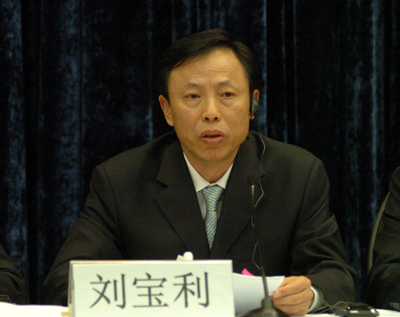
Liu Baoli introduced China's educational exchange and cooperation with other East Asian countries over the past years. First, the educational exchange platforms are built under the 10+1 framework. China has hosted the China-ASEAN Education Cooperation Week for three years in a row since 2008 and successfully held the China-ASEAN Education Ministers Roundtable. Those events have become major platforms and special brands of promoting China-ASEAN educational exchange and symbolize the penetration of China-ASEAN strategic partnership in the educational field. Second, the signing of intergovernmental educational cooperation agreements is accelerated. So far, China has signed intergovernmental educational cooperation agreements with 10 ASEAN member states, Japan and South Korea as well as Australia, New Zealand and India and degree mutual recognition agreements with the Philippines, Thailand, Vietnam, South Korea, Australia and New Zealand. Third, exchanges of students are carried out. China is providing more government scholarships for East Asian countries and committed to creating better study and living environment for overseas students in China. Fourth, language teaching is emphasized. Up to now, China has established 35 Confucius Institutes in ASEAN member states, 33 in Japan and South Korea and 13 in Australia, New Zealand and India. Many Chinese universities have opened courses teaching the languages of ASEAN member states. Fifth, exchange of youth is promoted. Sixth, Chinese institutions of higher learning are encouraged to actively participate in the regional cooperation of Asia.
Liu said that China will make active efforts to reinforce educational exchange and cooperation in East Asia and carry out such exchange and cooperation in an all-round manner, at multiple levels and in a wide range of areas. First, China will make full use of the platforms of the three Education Cooperation Weeks and the Education Ministers Roundtable to cooperate comprehensively with ASEAN member states in the educational field under the China-ASEAN framework. Second, China will actively push forward the development of stable dialogue and exchange mechanisms and deepen educational exchange and cooperation under the ASEAN and China, Japan and South Korea framework. Third, China will actively support all members in developing the stable multilateral educational exchange mechanisms under the EAS framework in order to enhance the competitiveness and influence of higher education of this region in the world.